

Quality Certified
Medical Certified
Automotive Certified
Certified
Certified
What is Die Casting
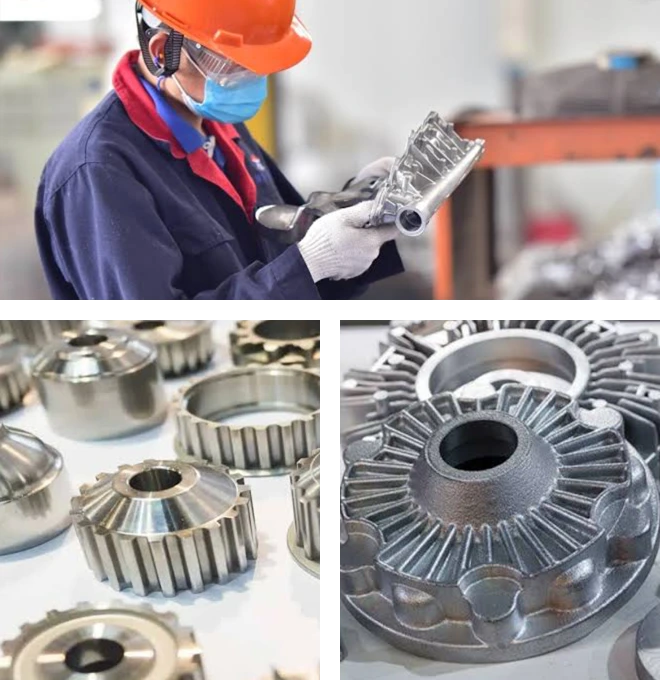
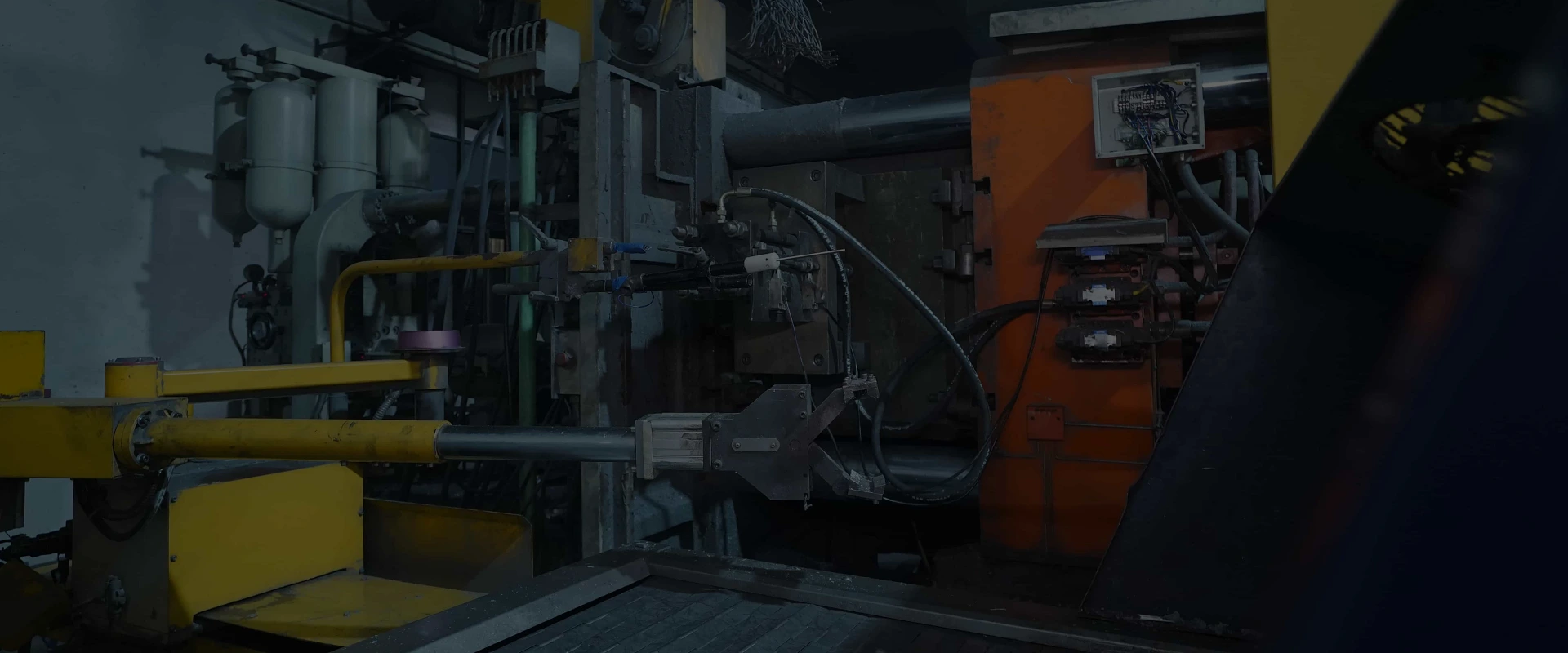
Die casting is the manufacturing process of choice when producing high volumes of relatively
complex metal parts and is widely used due to its versatility, reliability, and accuracy.
Die casting eliminates all or most secondary operations needed to make a metal part;
however, post-machining is common to meet tighter critical-to-function tolerances. Die
casted parts can also be post-processed in any finish their respective CNC machined
counterparts can.
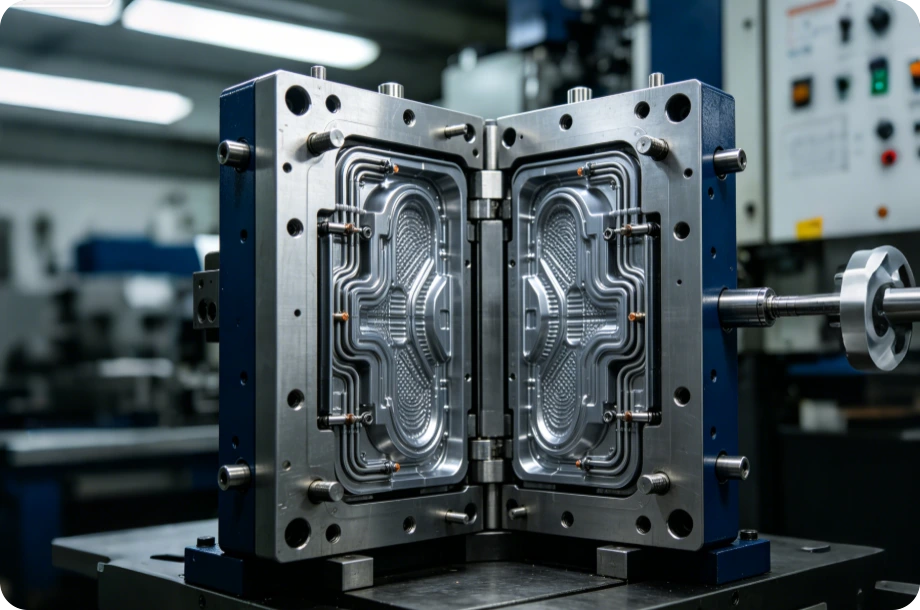
Like injection molding , die casting requires the fabrication of a mold tool–called a
die–that can have one or multiple cavities. The process works for softer alloys, including
aluminum and zinc alloys, due to their relatively lower melting temperature. Die casting
works by injecting molten metal into a die cavity, which takes the shape of the part and
hardens into place before removal. Depending on the project scope, die casting can be low-
or high-pressure, using a ladle or plunger to deposit metal. Die casting can produce highly
complex, tight-tolerance parts in a repeatable manner at very high production volumes.
Modern die casting methods such as squeeze casting and semi-solid metal casting produce
high-quality parts for nearly every industry. Die casting companies will often specialize in
casting aluminum or zinc, with aluminum making up roughly 80% of die cast parts.
Accuro Rapid Offers Die Casting Services
Accuro Rapid partners with die casters utilizing the latest die casting machines and technologies to provide high-quality, on-demand parts for a wide range of industries. Our products focus on two main types of die casting: hot chamber casting and cold chamber casting. Both types can produce parts with complex geometries, precise tolerances, and robust mechanical properties.
Hot Chamber Die Casting
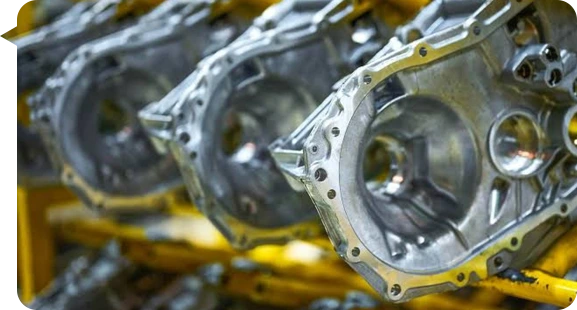
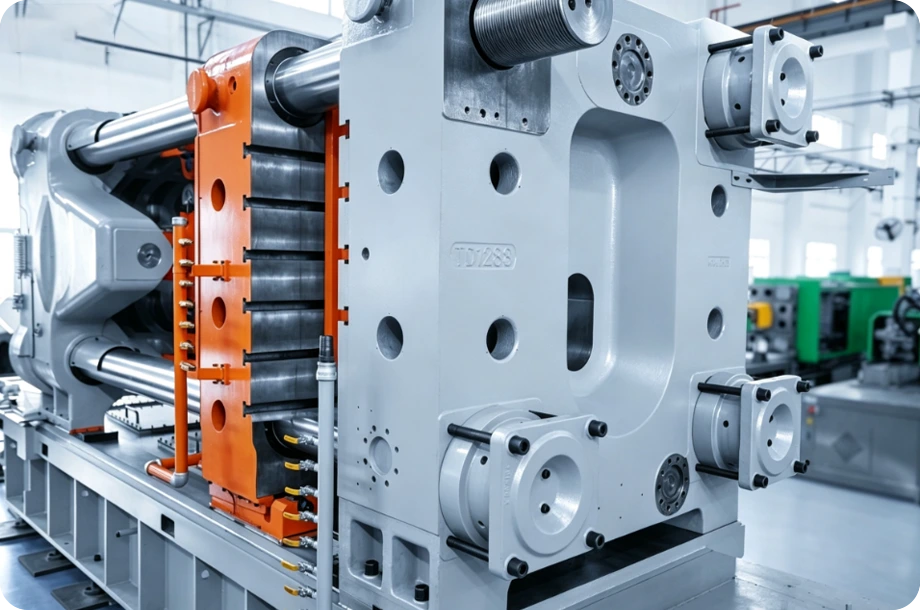
Also known as gooseneck casting, hot chamber die casting is the most popular die casting
process. It is best suited for low-melting-point alloys such as zinc, magnesium, and lead.
A holding vessel is filled with metal and heated using hot chamber die casting until it
melts in a connected or built-in furnace. A feature of the hot chamber system, known as
the gooseneck tube, is the formation of a holding chamber within the vessel and a
nozzle-like channel that connects to the injection cavity in the fixed half of the mold.
A plunger located above the chamber allows molten metal to be filled from the holding
vessel. As the chamber is loaded, the plunger descends, forcing the molten material along
the gooseneck tube into the mold cavity. As the metal cools and solidifies in the mold,
the mold is held together under pressure. Once the metal has cooled sufficiently, the mold
opens, and the casting is ejected by an ejector pin.
Cold Chamber Die Casting
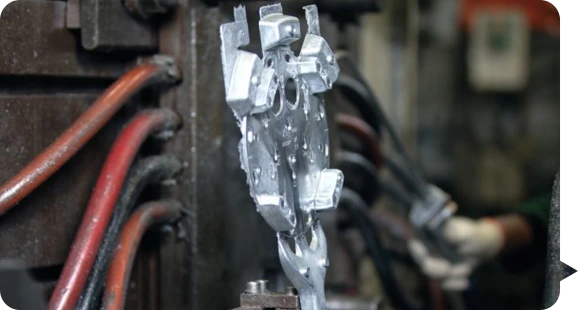
Cold chamber die casting employs a process where the chamber is maintained at room
temperature, without a heat-insulating vessel for the molten metal. The metal is melted in
a separate furnace and manually deposited into the shot-peening chamber through a gating
hole using a ladle.
In cold chamber die casting, the mold is directly connected to the injection chamber,
eliminating the use of a plunger system. Instead, a punch forces the molten metal into the
mold and maintains high pressure as the metal solidifies. This type of die casting is
suitable for materials with relatively high melting temperatures, such as aluminum.
Advantages of Die casting

Complex Geometry
Die casting can reliably produce custom die cast parts with thin walls and challenging geometry that is durable and dimensionally stable.

Strength
Metal die castings are typically stronger than plastic injection molded parts and more resistant to high temperatures. Metals such as aluminum offer exceptional strength-to-weight ratios.

Precision
Die casting offers typical tolerances ranging from +/-0.003″ – 0.005″ per inch but can go as tight as +/- .001” depending on your specifications, part geometry, and material.

Precision
Metal finishers can produce cast parts with smooth or textured surfaces, paints, and plating finishes. Finishes can protect from corrosion and improve cosmetic appearance.
Metal Materials for Die Cast Parts
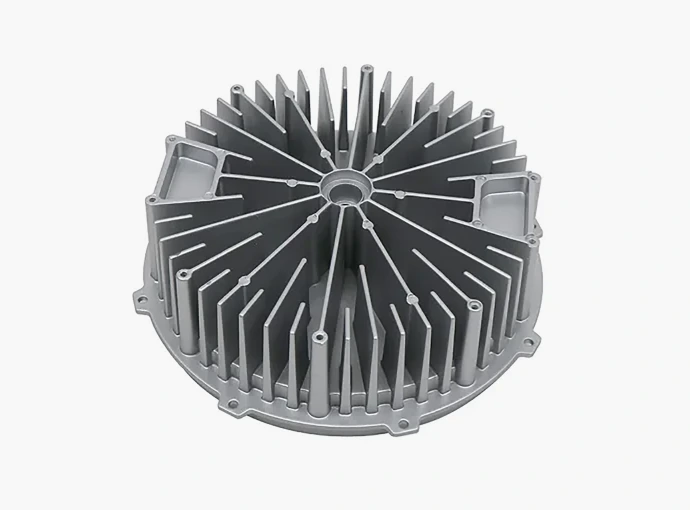
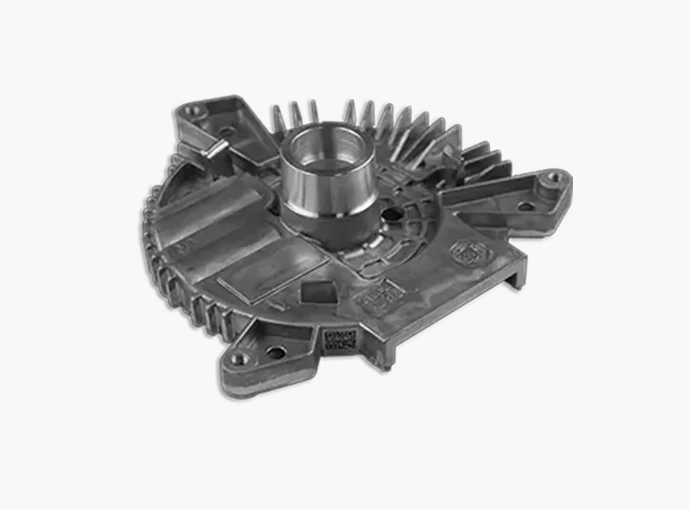
Several different metal materials are available to choose from when manufacturing using die casting. The material you choose will depend on your intended use for the product. For instance, cast aluminum parts are common in aerospace or automotive applications where corrosion resistance and weight reduction are essential factors. You can learn more about the main types of die casting materials we offer in the sections below. If you have a specific material request, just let us know!
Get A Quote / Get In Touch
Please use the following formats:
.stl, .obj, .wrl, .step (.stp), .iges (.igs), .3mf, .dxf and .zip
50mb max file size (per file)
If you have a file type not listed, please contact us to discuss first.
Please place file(s) for transfer in the same folder and ZIP or RAR before attaching.
Video Display

Recent Articles/Blog
Selective Laser Sintering (SLS) 3D Printing Complete Overview
Get to know the SLS printing process better and find ou […]
Insert Moulding vs Overmoulding
We've listed several scenarios in which it's better to choose overmoulding over insert moulding ...
Learn More
Kombo Audio and Accuro Rapid shake …
Services used: sheet metal fabrication, low-volume injection molding...
Learn More
A Guide to Vapour Smoothing: What It Is…
Vapour smoothing (also called vapour polishing) is a post processing technique used to smooth ...
Learn More